
 English
 Español
 Pусский
 Français


particulate filtration efficiency tester
A particulate filtration efficiency tester is a specialized instrument used to evaluate the ability of filter materials, masks, respirators, and other protective media to capture airborne particles. It plays an important role in quality control, product development, certification testing, and ongoing performance verification across industries such as healthcare, personal protective equipment, cleanroom technology, HVAC, environmental monitoring, and advanced manufacturing.The basic function of a particulate filtration efficiency tester is to determine how effectively a sample material removes particles from an air stream under controlled conditions. During a test, a known concentration of particles is introduced upstream of the sample. Sensors then measure the particle concentration before and after the air passes through the material. By comparing these values, the instrument calculates filtration efficiency, usually expressed as a percentage. A higher percentage indicates better particle capture performance. In many cases, the tester also measures pressure drop or airflow resistance, which helps assess breathing comfort and energy efficiency in filtration systems.Modern particulate filtration efficiency testers are designed to provide accurate, repeatable, and standardized results. They often include a particle generation system, an airflow control unit, sampling ports, sensitive particle detection sensors, and software for data processing and reporting. Depending on the application, the tester may use sodium chloride, paraffin oil, or other test aerosols to simulate real-world contaminants. Some instruments are capable of evaluating submicron particles, making them suitable for demanding applications where high levels of protection are required.One important advantage of this type of tester is its ability to support compliance with international and national standards. Many filter products must meet strict performance requirements before they can be sold or used in regulated environments. A particulate filtration efficiency tester helps manufacturers verify whether a product meets those requirements and identify weaknesses in design or material composition. This allows engineers to improve fiber structure, layer configuration, electrostatic treatment, and overall filter media performance.The tester is also valuable for comparing different materials and product designs. For example, it can reveal how changes in fiber density, thickness, or surface treatment affect filtration efficiency and air resistance. This information is useful during research and development because it helps optimize performance while maintaining comfort, durability, and cost-effectiveness. In production environments, the tester is used for batch inspection to ensure consistent quality from one manufacturing lot to another.Ease of use, stable operation, and reliable data output are key features of a well-designed particulate filtration efficiency tester. Many systems offer automated testing procedures, touch-screen interfaces, programmable settings, and digital report generation. These functions reduce operator error and improve testing efficiency. Some advanced models also support long-term data storage, remote monitoring, and integration with laboratory information systems.In summary, a particulate filtration efficiency tester is an essential tool for measuring the protective performance of filter materials and related products. It provides accurate data on particle capture ability and airflow resistance, helping manufacturers, researchers, and quality inspectors ensure product reliability, safety, and compliance. As demand for high-performance filtration continues to grow, the importance of this testing equipment will remain significant in both industrial and public health applications.
نتاج
تصنيف:
-
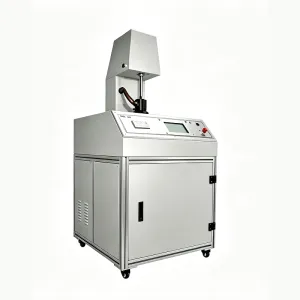
اختبار كفاءة ترشيح الجسيمات
تصنيفها: Filter Paper & Media Testing Instrumentsالمشاهدات: 199عدد:وقت الإصدار: 2026-07-17 08:40:41جهاز اختبار كفاءة ترشيح الجسيمات هو جهاز دقيق مصمم لاختبار كفاءة الترشيح لمعدات حماية الجهاز التنفسي مثل الأقنعة والنسيج الذائب، وهو مناسب لتقييم منتجات سلسلة KN وKP. تم تصميم الجهاز وفقًا لمعيار GB 2626-2019 (معدات حماية الجهاز التنفسي - جهاز تنفس الجسيمات غير المزود بالطاقة لتنقية الهواء). يستخدم مولد الهباء الجوي لإنتاج رذاذ NaCl بتركيز محدد (أقل من 200 مجم/م³، حجم جسيم 0.075±0.02 ميكرومتر). يقيس مقياس الضوء عالي الدقة تركيز الهباء الجوي قبل الترشيح وبعده، ويحسب كفاءة ترشيح الجسيمات. نطاق معدل التدفق هو 10-100 لتر/دقيقة بدقة 2%، والضغط 500 باسكال. يتكون النظام من مولد الجسيمات، وجهاز قياس التدفق، وجهاز قياس التركيز، إلى جانب جهاز ترطيب وغرفة محكمة الغلق لمحاكاة ظروف التنفس الفعلية. إنها معدات موحدة لاختبار كفاءة الترشيح ومراقبة الجودة في تصنيع الأقنعة والأقمشة المصهورة ووكالات التفتيش والمؤسسات البحثية.
أخبار
تصنيف:
لا توجد نتائج بحث!
حالة
تصنيف:
لا توجد نتائج بحث!
فيديو
تصنيف:
لا توجد نتائج بحث!
تحميل
تصنيف:
لا توجد نتائج بحث!
تجنيد
تصنيف:
لا توجد نتائج بحث!
المنتجات الموصى بها
لا توجد نتائج بحث!



 هاتف
هاتف